


Top Features to Look for in a Digital Business Card Platform

Traditional paper business cards are no longer sufficient to sustain contemporary professional ties in a world where networking occurs both offline and online. Professionals today require quicker, more intelligent, and more adaptable methods for managing their personal brand, forming contacts, and exchanging information.
Digital business card platforms, which integrate contact sharing, lead generation, branding, and analytics into a unified digital experience, have become increasingly popular as a result of this change.
Digital business cards enable professionals and companies to instantaneously convey accurate information, update details in real time, and interact across many channels, in contrast to paper cards that quickly get out-of-date or misplaced.
These platforms are now useful tools for networking, customer interaction, and business growth, regardless of whether they are used by CEOs, sales teams, entrepreneurs, freelancers, or huge organisations.
With the ongoing development of digital business card technology, contemporary systems today provide much more than just contact sharing. Digital business cards are changing the way professionals engage in a world that is becoming more and more digital.
What is a digital business card platform?

A digital business card platform is a modern, electronic alternative to traditional paper business cards. It allows you to create customisable virtual profiles to instantly share your contact details, social links, and multimedia.
- Dynamic updates: unlike printed cards, you can change your contact information, title, or portfolio links at any time without having to reorder or reprint.
- Instant saving: when you share your card, recipients can save your contact information directly into their phone’s address book with a single click.
- Lead capture and analytics: many platforms allow you to track card views, see which links get the most clicks, and integrate data.
Why businesses are switching to digital business cards
We’ve all been there: meeting someone for the first time at an event, making a great connection, exchanging paper business cards… and then finding that card weeks later in your jacket pocket, crumpled and forgotten. That meaningful connection? Lost to the void of paper-based introductions.
It’s time for an upgrade. Digital business cards aren’t just a trendy alternative, they’re the next evolution in how we connect professionally. The shift to digital is happening fast.
Digital business cards solve these problems while offering benefits that paper can’t provide:
- Always with you: your digital card lives on your phone, which means no more “I forgot my card” moments.
- Real-time updates: changed jobs? Updated contact details? New portfolio? Your digital card updates everywhere instantly, with no reprinting required.
- Rich content: beyond basic contact info, digital cards can include videos, portfolios, calendars, payment links, social profiles, and more. Studies show that multimedia content significantly improves information retention and engagement with your details.
- Trackable interactions: digital cards provide analytics on who’s viewed your card, when, and how often. This visibility helps prioritise follow-ups with high-intent contacts.
Mobile-friendly design and cross-device compatibility
A mobile-friendly design for digital business cards guarantees smooth and universal access. It requires browser-based optimisation, responsive design, and cross-device compatibility across iOS and Android without forcing recipients to download apps.
- Native contact saving: cards should feature single-tap functions that directly interact with a phone’s operating system to instantly prompt saving to local contacts.
- Browser-based UI: using Progressive Web App (PWA) technology allows your card to function like an app without requiring an App Store or Play Store download.
- Minimalist visual hierarchy: prioritise a clean headshot or logo, a concise professional summary, and a single, strong Call to Action (like “Save Contact” or “Book Meeting”) at the top of the screen.
- Interactive elements: integrate actionable elements tailored to mobile behaviour, such as a phone number that triggers a direct call, or calendar links to schedule directly.
- Wallet passes: saving to an Apple Wallet or Google Wallet ensures native, permanent storage on the recipient’s primary phone ecosystem.
Custom branding and personalisation features
A business card is more than just a piece of cardstock with your contact details. It’s a mini-resume, a branding tool, and a powerful statement about your professional identity. But, in an era where physical cards are quickly becoming obsolete, the digital business card revolution is underway. Unlike traditional cards, digital versions offer limitless potential for customisation, allowing professionals to shape their personal brand and stand out in a sea of standard templates.
Customising your digital business card goes beyond selecting a unique colour scheme or font. It’s about creating a compelling and interactive digital profile that highlights your skills, accomplishments, and professional goals. Whether you’re a realtor wanting to showcase your top property listings or a marketer displaying your latest project portfolio, the goal is to make an unforgettable first impression.
Customisation is the key to a memorable professional persona. That’s why digital business cards are designed to be fully personalised to reflect your unique professional identity. Cardella users can add their social media profiles, website links, videos, and even PDFs, allowing contacts to access a view of their professional prowess at a simple tap.
The value of a personal brand cannot be understated.
Real-time editing and instant information updates
Imagine you are at a networking event, and your desired investor is standing inches away from you. You have spent endless nights perfecting your elevator pitch. Fast-forwarding to today, you gathered your courage, eased the butterflies, and finally delivered a killer pitch.
Your investor shows interest, takes your business card! Boom! You got your first funding! Time to fly high!
But wait, there is a catch. You shared one of your old business cards, which contains the wrong contact emails and phone numbers. If this is the case, then all of your efforts will go in vain. This has become a common scenario these days.
This is why keeping your contact information up to date is crucial. You see, outdated information creates confusion and weakens your professional image. That’s why a dynamic and proactive solution is essential. This is where digital business cards seal the deal!
- Job or title changes: if you have taken on new duties or a position in your existing or a new business, your digital business card can instantly share updated titles and positions.
- New contact details: backdated email and phone details can create confusion and mistrust. Thus, real-time updates on your contact information maintain the integrity of the communication medium.
- Brand consistency: your social media, websites, and portfolio should be top-notch and visually cohesive with your current endeavor.
Analytics and engagement tracking features
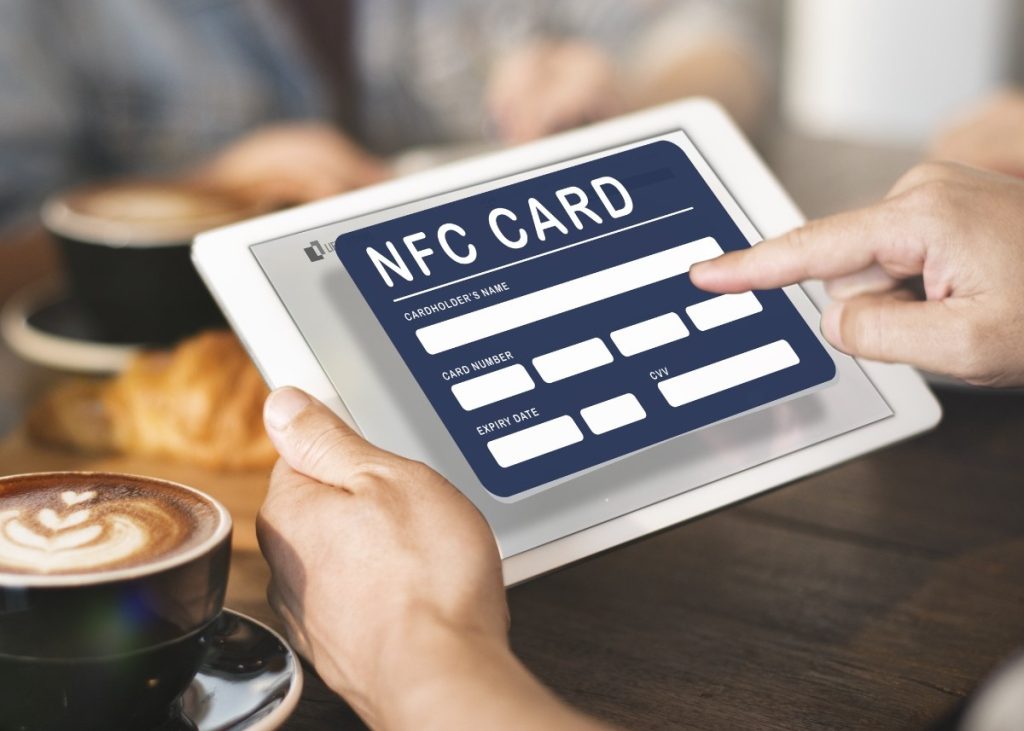
Digital business card analytics is the data you get from tracking how people interact with your virtual card. Think of it as a behind-the-scenes peek at how many people are scanning your QR Code, tapping your NFC tag, or clicking your links, and even their locations and the devices they’re using to do it (Android or iOS).
For professionals and businesses, this data is gold. It turns a simple exchange into a treasure trove of insights, helping you measure your networking impact and fine-tune your lead generation approach.
Ever handed out a stack of paper business cards at an event and wondered whether anyone will actually keep them? Digital business cards with analytics are your answer.
They don’t just sit in someone’s wallet (or the trash). They tell you a story and make a great first impression. Analytics bridges the gap between tossing your physical card into the wild and understanding its real-world impact.
- Measuring networking ROI: zooming into virtual conferences, or firing off emails with your digital card attached and hoping for the best. But with analytics, you’re not guessing anymore. You can track how many scans or views come from each effort in real time, giving you a clear picture of your return on investment (ROI).
- Targeting follow-ups or sales efforts by finding high-engagement areas: ever wonder where your network’s buzzing the most? Location-based analytics from your digital business card can reveal where engagement is coming from, allowing you to pinpoint areas with the most interest in your offerings.
- Optimising your sharing strategy: effective networking takes strategy, and not every way you share your digital business card will be a home run. Analytics reveal which methods or channels are hitting it out of the park.
Social media and website integration
The best social media integration creates a clear path from physical card to digital connection. Choose one clear destination, make it scannable in under two seconds, and ensure your card’s visual language matches what people find upon arrival.
People want to verify who you are before committing to a conversation: your Instagram feed or LinkedIn activity tells a story your printed name cannot. Your social media presence serves as a trust signal, converting casual encounters into meaningful connections.
Choose the platform where you’re most active and professional. A dormant LinkedIn or inconsistent Instagram does more harm than no social media at all.
In today’s digital landscape, creating a cohesive online presence is crucial for businesses and individuals alike. One effective way to achieve this is by integrating digital cards with your website. Digital business cards offer a modern and interactive way to share contact information and other relevant details.
Integration with calendar and appointment booking tools
First impressions matter, especially in client-focused professions. Whether you’re a realtor, consultant, freelancer, or service provider, making it easy for clients to book time with you can set you apart. Instead of juggling emails, a “Schedule a Consultation” button on your digital business card streamlines the process. With Google Calendar’s appointment scheduling tool, you can let prospects book time directly based on your availability; no back-and-forth required.
- Step 1: create your Google calendar appointment schedule
- Step 2: customise your booking form
- Step 3: add the booking link to your business card
- Step 4: test the integration
Future trends in digital business card technology
In today’s fast-paced world, networking is evolving rapidly. Traditional paper business cards are becoming less practical and less environmentally friendly. The rise of digital business cards is transforming how professionals connect and share their information.
Trend 1: NFC becomes the default sharing method:
QR codes democratised contactless sharing. NFC is completing it. The tap interaction is faster, requires no camera alignment, and works in low-light or awkward physical conditions where holding a phone steady to scan is impractical.
Trend 2: dynamic profiles replace static links:
The early wave of digital business cards used static QR codes that linked to a fixed URL. If you changed jobs, changed your number, or wanted to update what the card shared, the card was obsolete. You needed a new one.
Trend 3: team and bulk adoption accelerates:
The individual professional adopting a digital card as a personal upgrade was the first wave. The second wave, which is happening now, is organisations replacing paper card programmes with unified digital card solutions for entire teams.
Trend 4: integration with CRM and professional platforms:
The frontier of digital business card development is not the card itself. It is what happens after the tap. Leading providers are building integrations that automatically add tapped contacts, LinkedIn connections, and email marketing platforms. The card becomes not just a contact sharing device but the first step in a managed relationship pipeline.
Building global connections is not as easy as everyone seems to think it is, especially with paper cards, as you have to meet in person. However, digital business cards make it easier as you don’t have to meet the person physically to share your card.
Global networking is about speed, accuracy, accessibility, and efficiency. With a digital card, sharing your professional identity takes just one tap or scan. Unlike paper cards, you can send your details instantly over email, chat, or social media.
In this way, you can represent your company without much effort and stand out from the competition. If you have any further questions about creating your digital business card, please feel free to contact us now.